Fall and Pico for Sarees: Meaning, Cost and Care
Learn what fall and pico mean for a saree, when finishing may help, and what to ask a US tailor about placement, cost and care before your first wear.
Check the details before choosing a saree
Finishing and blouse contents vary by piece. Ask what is included before ordering; fall and pico services are not assumed.
Fall and Pico for Saree: The Essentials
Fall and pico for saree finishing are two different jobs: a fall is a support strip attached to the inside of the lower edge; pico is a narrow stitched finish for a raw edge. They can help protect the hem and give it a neat finish. Whether a particular saree needs either treatment depends on its existing edges, fabric, border and how you intend to wear it.
Start by checking the actual saree with your tailor. An intact woven edge is different from a cut edge, and a sheer tissue saree may need a lighter approach than a substantial border. Neither fall nor pico proves silk purity, handloom production or the origin of a saree.
What Is Fall and Pico in a Saree?
Fall: the strip sits on the reverse of the lower portion that your tailor identifies for support. Discuss its width, length and placement after checking the saree and your planned drape. A ready-cut strip is a starting material, not a universal measurement for every saree.
Pico: the tailor finishes exposed raw edges with a narrow edging stitch. Ask which ends need finishing and how the stitch will look on the fabric. Do not cut an intact selvedge, tassels, blouse piece or decorative edge simply because a generic instruction says to pico every side.
Does Every Saree Need a Fall?
No. Ask the tailor to assess the existing finish before adding another layer. A heavier strip can alter the way a light or sheer saree hangs; a substantial finished border may not need extra support. The useful question is “What will this treatment do for this piece?” rather than “Do all silk sarees need it?”
For Banarasi sarees and Kanjivaram sarees, inspect the border and the actual edges instead of choosing a treatment from the collection name. For a lightweight or tissue piece, discuss the visibility and weight of the fall before stitching. See our saree-weight guide for questions to ask when comparing pieces.
Before You Start: What to Ask the Tailor
- Is the saree already finished, and which edges are genuinely raw?
- Does the blouse piece need separating? Agree on this before anything is cut.
- Where should the fall start and end for this drape, and will it show through the fabric?
- Which thread, strip weight and stitch suit the selected piece?
- What care instructions apply to both the saree and the added material?
- What are the complete price and collection date, including any pressing or repairs?
Bring the saree and explain how you plan to wear it. If you are also arranging a blouse, use the separate tailor-measurements checklist. Fall and pico do not replace blouse fitting or checking the finished drape with your intended footwear.
How Fall and Pico Are Planned
- Inspect before cutting. Identify the face, reverse, lower border, pallu and any attached blouse piece. Ask the tailor to point out the edges to be finished.
- Agree on placement. Drape or lay out the saree without stretching it. Mark the section that needs support and check how the proposed fall sits against the border.
- Choose compatible materials. Compare the fall and thread against the actual fabric in ordinary light. Ask whether the strip needs any preparation before attachment.
- Test the approach. Have an experienced tailor choose the needle, tension and edging method. Where a suitable spare swatch is available, test there rather than experimenting on a visible border.
- Check the work. Look at both sides for puckering, visible strip edges, skipped stitches and loose threads. Do not pull or stretch the saree as an authenticity test.
- Try the drape. Check walking, sitting and the lower edge with your intended footwear. Request an adjustment if the new strip feels bulky or catches as you move.
This is a preparation checklist, not a fixed sewing recipe. For home sewing, follow your machine’s instructions and practise first; SINGER’s hemming guidance also calls for a sewing test. A delicate, valuable or unfamiliar fabric is a good reason to consult an experienced tailor.
What Color Should a Saree Fall Be?
Compare options against the lower part of the actual saree. The best match may follow the body or border, depending on where the strip sits and what shows through. Hold the layers together in ordinary light and ask to see the effect from the front. Avoid choosing only from a color name or an online photograph.
Can I Do Fall and Pico at Home?
If you already sew and understand the fabric, you may be able to do the work yourself. Do not assume that a standard zigzag setting will give the finish you want on every silk, tissue or embellished edge. Ask a tailor when the material, tension or placement is uncertain; avoid cutting the saree until the plan is clear.
Choosing the Finish: Questions by Fabric Detail
| What you see | What to check |
|---|---|
| An exposed cut edge | Which edging method will secure it without changing the intended length or decoration? |
| A sheer or lightweight body | Will the fall show through or add too much weight? |
| A thick or heavily worked border | Is extra support needed, and where can stitches sit without damaging the design? |
| An already finished edge | Is further work necessary, or should the existing finish be left intact? |
How Much Does Fall and Pico Cost in the US?
Request a quote from the tailor who will inspect your saree. We do not publish a universal US price because the fabric, existing work, material and turnaround can change the quote. Confirm whether the price covers the fall strip, edge finishing, pressing and any repair separately.
Before ordering from Swathi Design, ask which finishing details are included for the selected piece. Do not assume that every listing arrives either finished or unfinished. You can ask the boutique about the product’s current details through WhatsApp; tailor availability, price and timing need separate confirmation.
Care and Inspection After Finishing
Follow the care guidance for the particular saree and ask the tailor about the added strip and thread. Fall and pico do not make a dry-clean-only garment washable, and a care method suitable for one cotton or silk piece may not suit another. If instructions are missing, ask before washing, soaking or pressing.
After wearing, inspect for loose stitches or a strip that has started to detach. Avoid pulling loose threads or trimming a thread you cannot identify; ask the tailor to repair the area. Store the saree clean and dry without crushing the worked edge.
Fall and Pico Questions Before First Wear
What does fall and pico mean?
Fall means the inner support strip; pico means the stitched edge finish. Tailors may quote the two jobs together, so ask exactly which edges and materials the quote includes.
Can I wear a saree without fall and pico?
Check whether its edges are already secure and whether the drape works for you. Some sarees do not need extra work. If there is a raw or damaged edge, ask a tailor to assess it before wearing or cleaning the saree.
How do I check whether the finishing is good?
Look for a smooth result from the front and reverse, without puckering or an exposed strip where it should be concealed. Check comfort in the drape. These checks assess finishing; they cannot authenticate silk, zari or handloom claims.
Does fall and pico include a stitched blouse?
No: discuss blouse cutting, stitching and fitting as separate work. Confirm the blouse-piece measurements before a tailor removes fabric from the saree.
Choose the Saree, Then Confirm Its Finish
Browse the current Banarasi collection or all sarees, then ask about the selected piece’s edges, material, blouse piece and availability. For fall and pico for saree orders, confirming the actual finish and tailoring timeline is more useful than assuming every piece needs the same treatment.
Featured in this guide
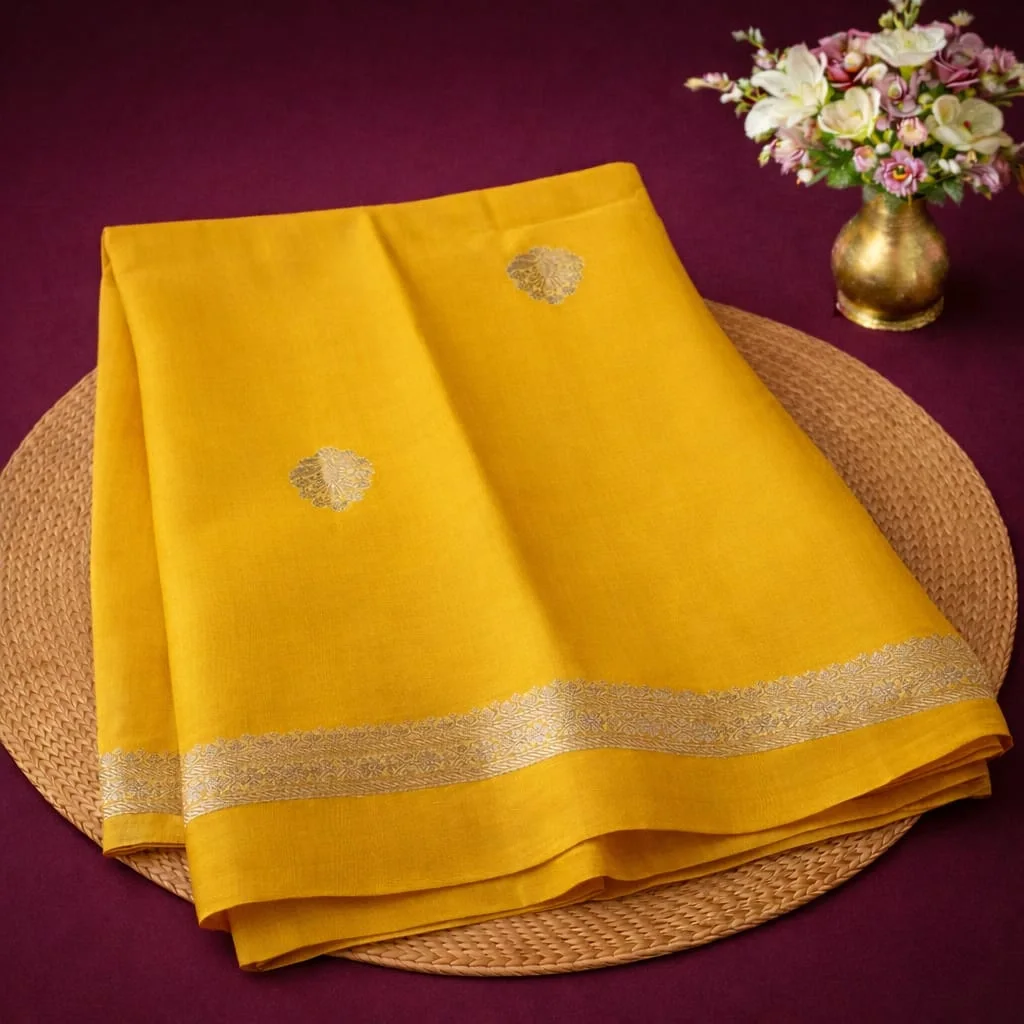
- Pure Banarasi Raw Mango Handloom Silk Saree – Festive Indian Elegance — Pre-order; confirm timing
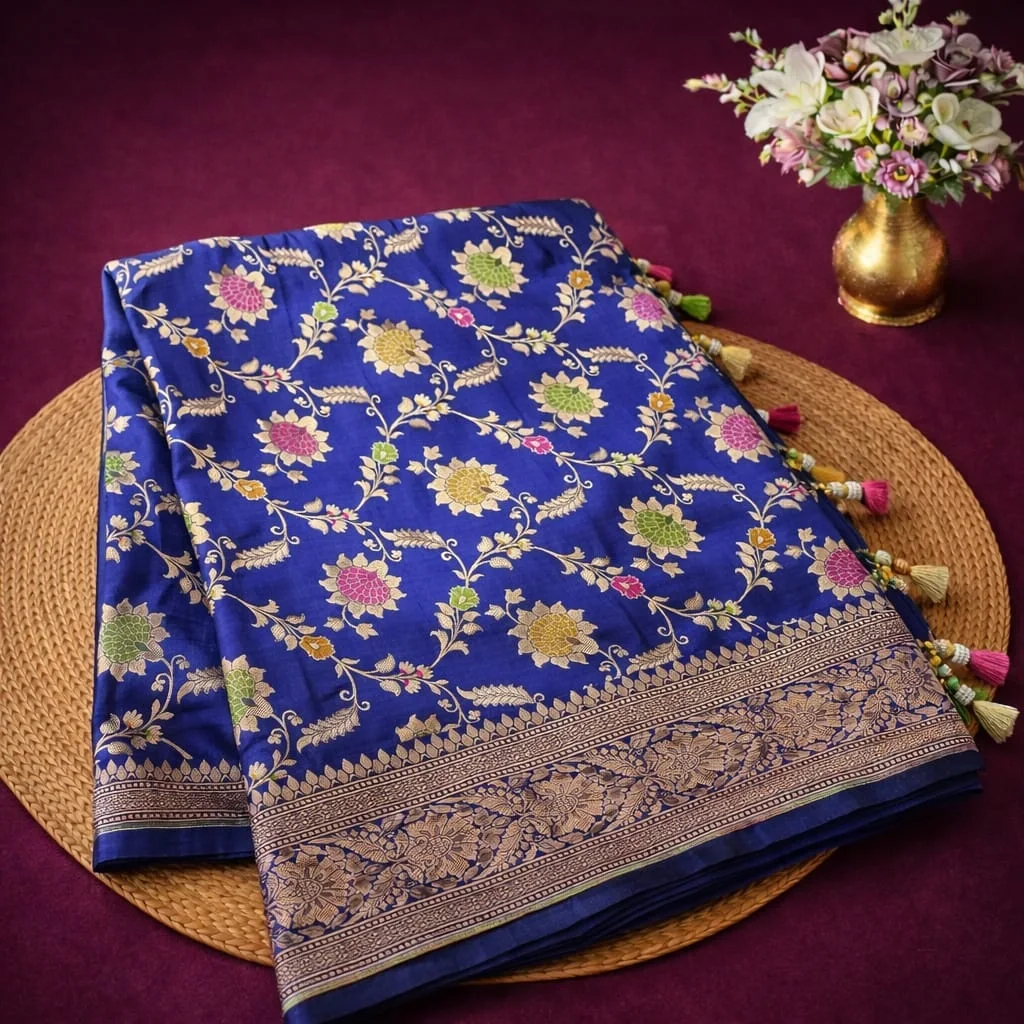
- Pure Banarasi Katan Silk Saree with Handwoven Meenakari – Varanasi Masterpiece — Sold out
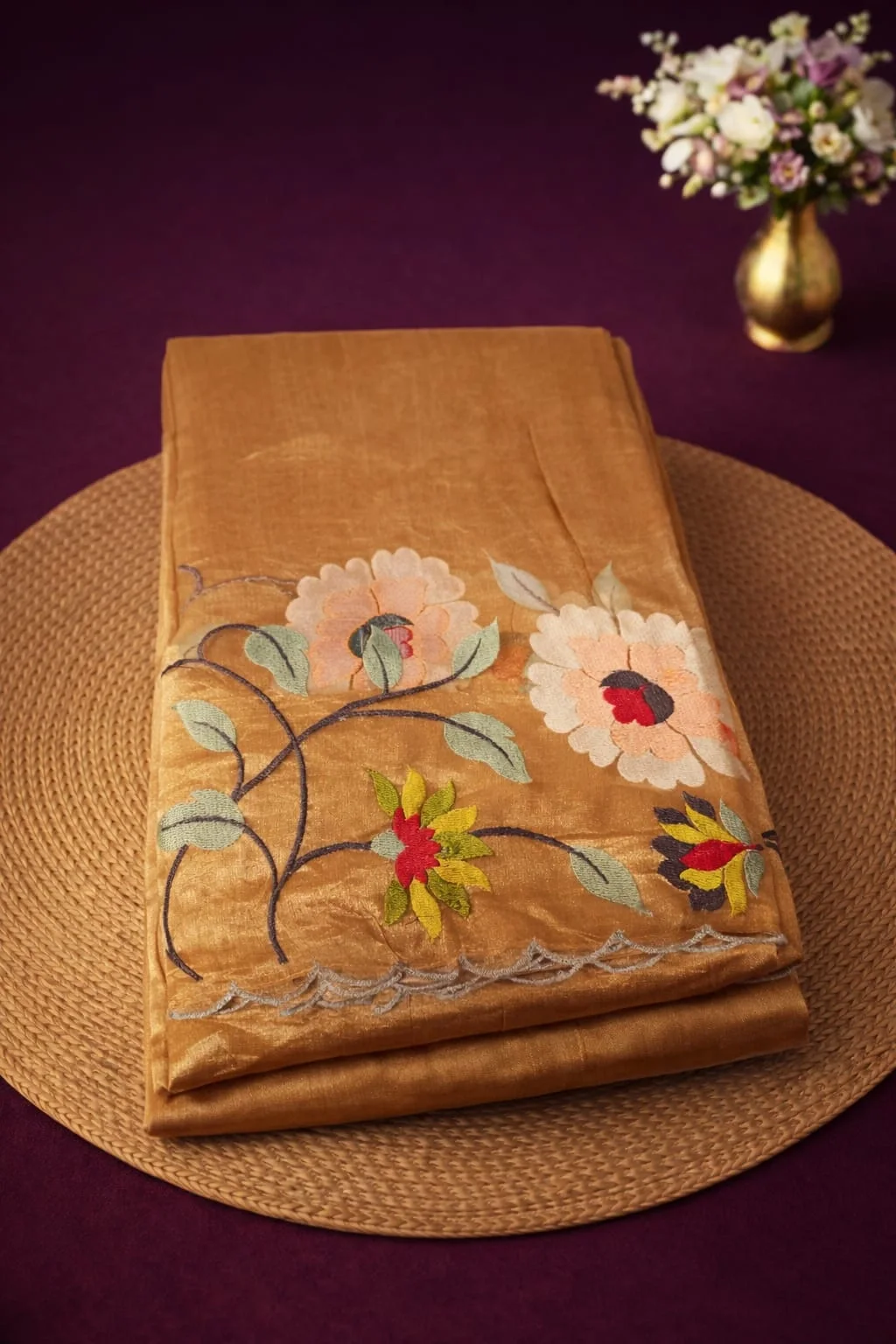
- Pure Banarasi Kora Tissue Saree with Zari Work – Gold Sheen for Weddings & Festivals — Pre-order; confirm timing
Part of the Handwoven Silks: Chanderi, Tussar & Raw Mango guide collection.
Related guides
- Chanderi Pattu Saree Styles for Indian-American Weddings and Celebrations
- Exquisite Russian Crape Silk Saree: Timeless Elegance for Every Occasion
- Luxurious Pure Russian Crape Saree: Timeless Elegance for Every Occasion
- Elevate Your Festive Wardrobe with Exquisite Handwoven Chanderi Sarees and Anarkali Dresses
- Timeless Elegance: Discover the Allure of Pure Chanderi Silk Sarees for Every Occasion